
About the artwork on this site
Every hero banner and sample piece you see across Airtistic.ai is an AI-generated image, produced by Gemini 3 Pro Image, prompted to evoke the visual idiom of a named real artist. The works themselves are original — they are not reproductions of any specific painting, print, or photograph by these artists. None of the real artists were involved or consulted; all of them are deceased except Yayoi Kusama, whose work is included with the same attributive care.
We chose this approach with eyes open. AI generation in the style of a named living or recently-living artist is one of the most contested practices in the field — a topic our own Glossary, Creative Challenges, and ethics modules treat at length. We use it here only at the level of broad visual idiom, with explicit attribution, with educational purpose, and we link to the actual works of each artist below so the real, irreplaceable record can be seen.
If an artist or rights-holder represented here objects to this use, please contact us and we will reconsider. The site exists to teach, not to substitute.
1862–1944 · Spiritual abstraction
Hilma af Klint
Pioneering Swedish painter who produced the first non-objective abstract works in Western art, years before Kandinsky, Mondrian, or Malevich.
Born in Solna, Sweden, into a naval family, af Klint trained at the Royal Academy of Fine Arts in Stockholm and worked initially as a portraitist and botanical illustrator. From 1896 onwards she and four other women — "The Five" — held weekly séances and produced automatic drawings, leading her to a lifelong calling.
In 1906 she began the "Paintings for the Temple" — 193 works completed over nine years that include the Ten Largest, the Swan series, and the Altarpieces. Knowing the world was not ready, she stipulated in her will that the work should not be shown for at least twenty years after her death. Her recognition came with the 2018 Guggenheim retrospective.
Used on Airtistic.ai for: Homepage hero — the visionary, foundational quality of "When AI picks up the brush".
AI-generated samples in this idiom
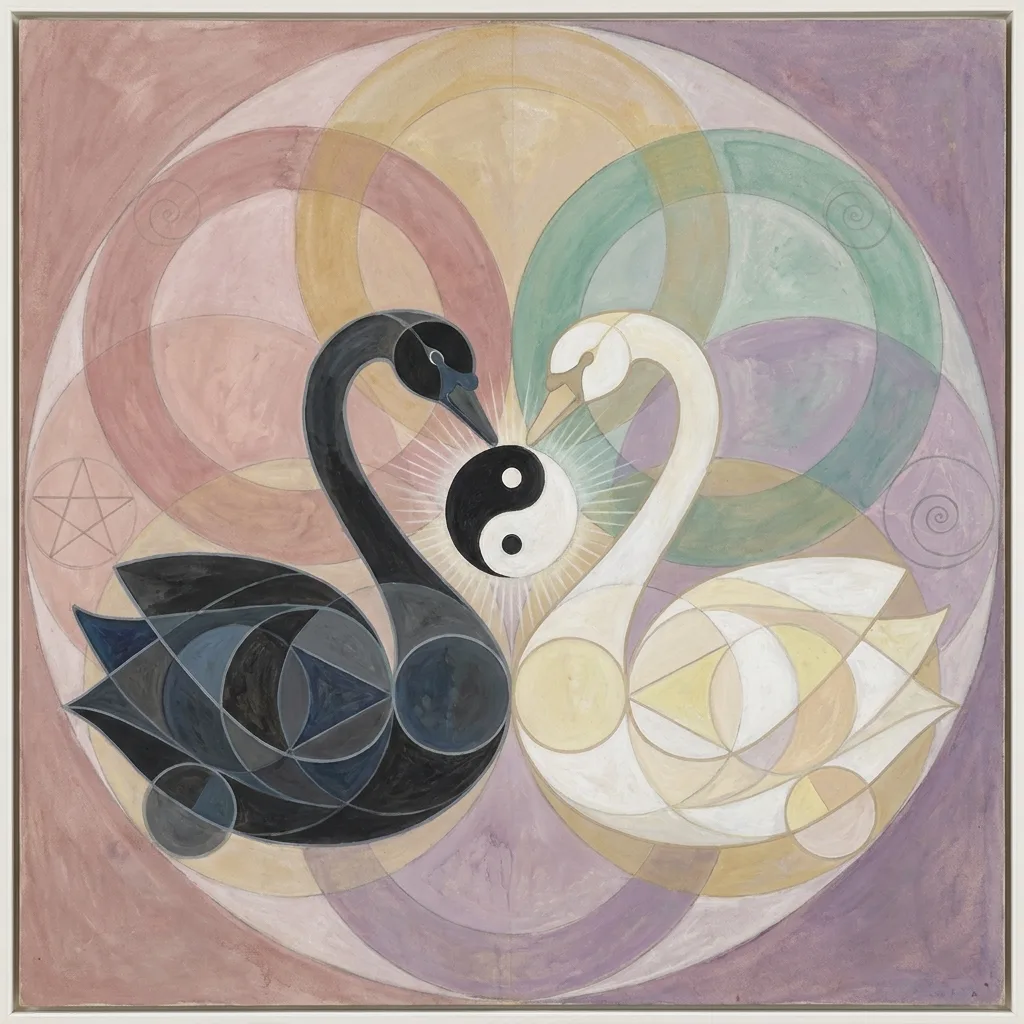
AI-generated in this artist’s visual idiom.
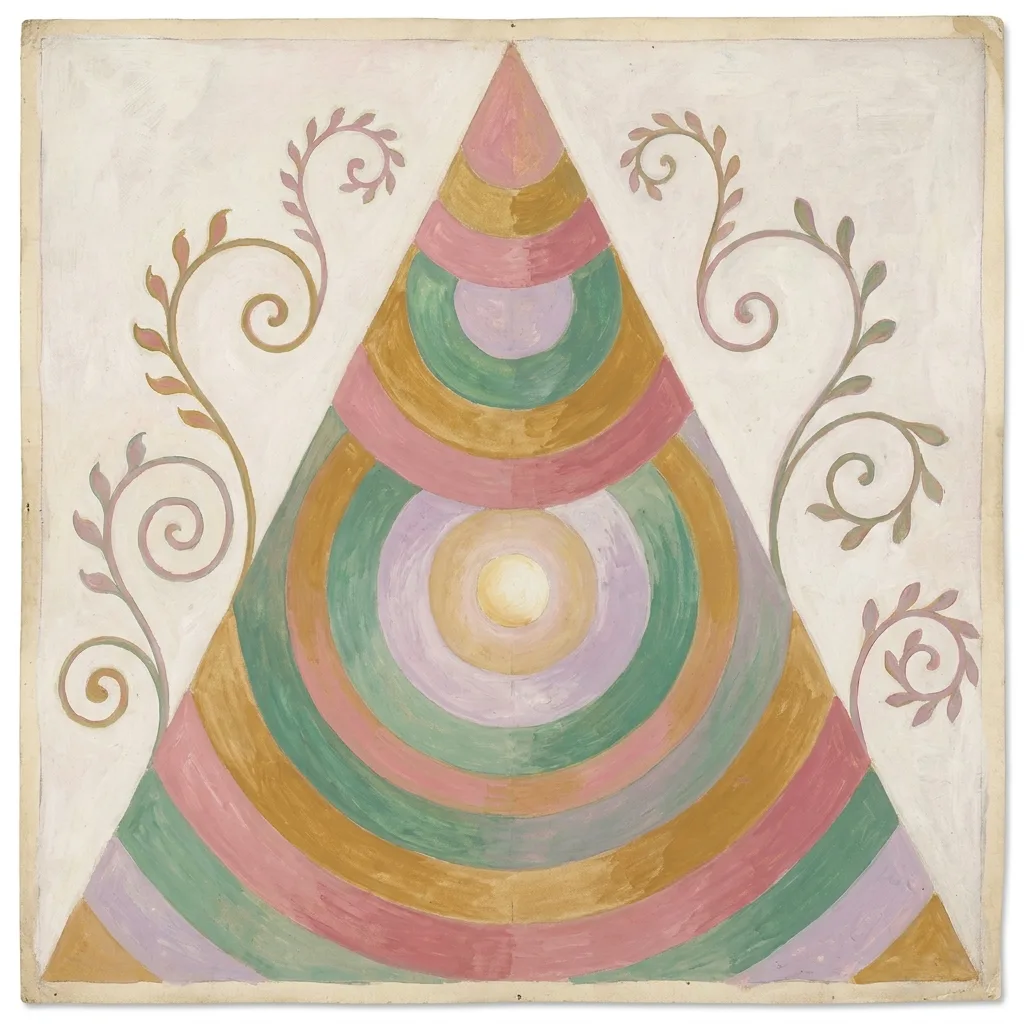
AI-generated in this artist’s visual idiom.
See the actual works
The Hilma af Klint Foundation holds the bulk of her work; the Guggenheim and Moderna Museet (Stockholm) have presented major retrospectives.
Citations & sources
1632–1675 · Dutch Golden Age
Johannes Vermeer
Delft master of domestic light, perhaps the most patient observer of how a single window falls on a single room.
Born in Delft in October 1632, Vermeer was the son of an art dealer and grew up among paintings traded as inventory. He joined the Saint Luke's Guild in 1653 and twice served as its hooftman. He painted slowly — perhaps two or three works a year — and produced only about 35 surviving paintings across two decades.
Most of his works depict women in domestic interiors lit by a window on the left, rendered with a precision that suggests his use of a camera obscura. He died in 1675, aged 43, leaving Catharina Bolnes with eleven children and considerable debt. His reputation faded for almost two centuries until Théophile Thoré-Bürger rediscovered him in the 1860s.
Used on Airtistic.ai for: About-page hero — the curator's studio, northern light, careful observation.
AI-generated samples in this idiom
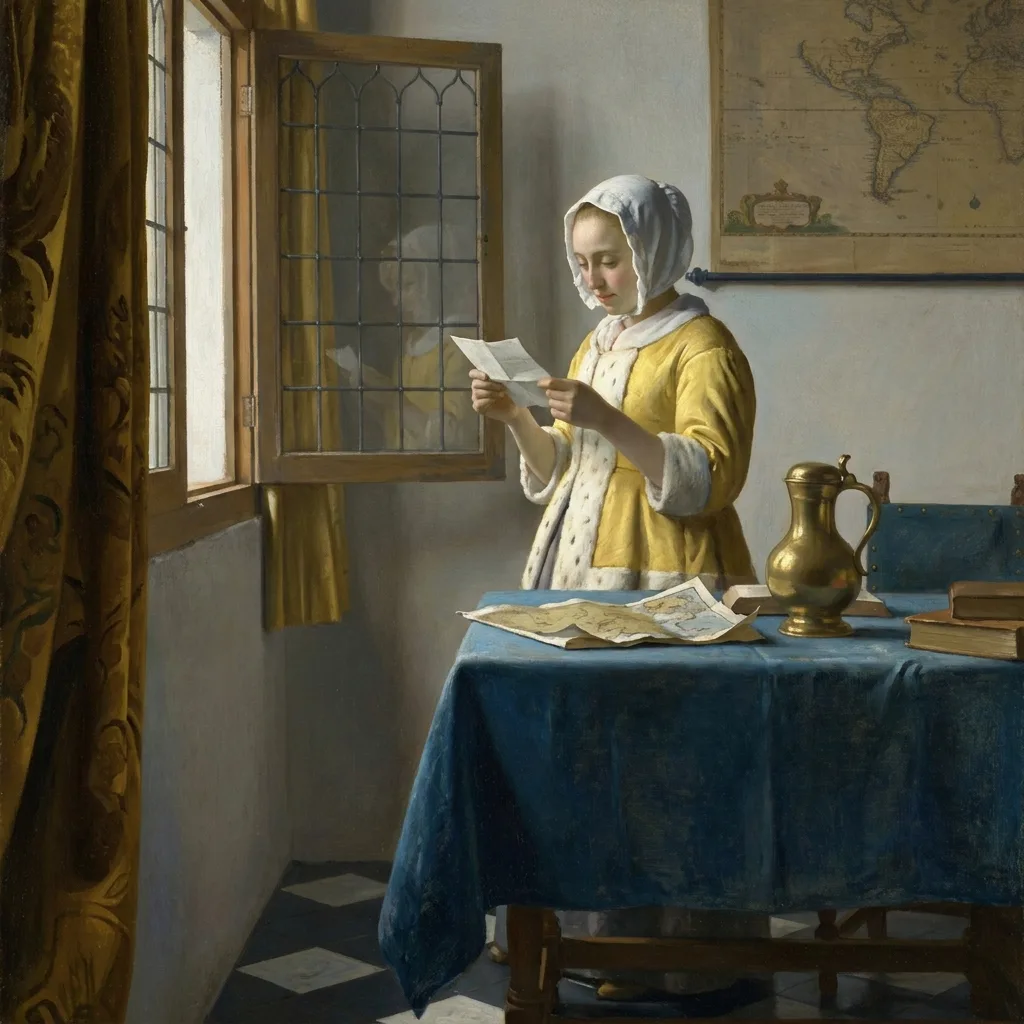
AI-generated in this artist’s visual idiom.
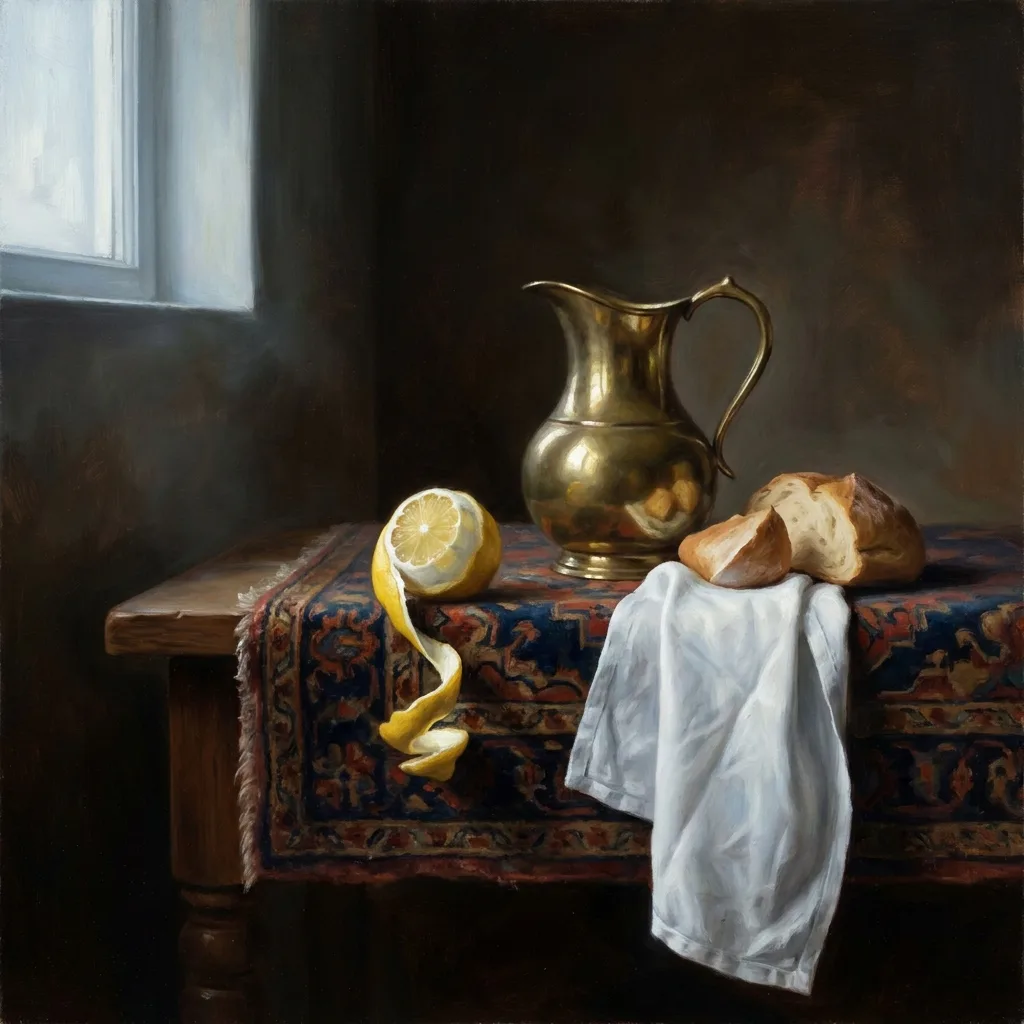
AI-generated in this artist’s visual idiom.
See the actual works
Vermeer's 35 paintings are distributed across museums in The Hague, Amsterdam, New York, Washington, London, Berlin, and beyond. The Mauritshuis in The Hague holds "Girl with a Pearl Earring".
Citations & sources
1928–2007 · Conceptual art / Minimalism
Sol LeWitt
American conceptualist who proved the artwork can be a set of instructions, executable by anyone willing to follow them.
Born in Hartford, Connecticut, to Russian-Jewish immigrants, LeWitt earned a BFA from Syracuse, served in the Korean War, and worked in the early 1950s as a graphic designer at I. M. Pei's firm and at MoMA's bookstore. In 1965 he began the modular open-frame sculptures that became his signature.
His "Paragraphs on Conceptual Art" (1967) and "Sentences on Conceptual Art" (1969) became foundational documents. From 1968 onwards his wall drawings — the artwork is the instructions; anyone may execute the score — re-defined what an artwork is. He was generous with younger artists and lived simply. He died in New York in 2007.
Used on Airtistic.ai for: Learn-section hero — the instructional clarity of "learning by following the score".
AI-generated samples in this idiom
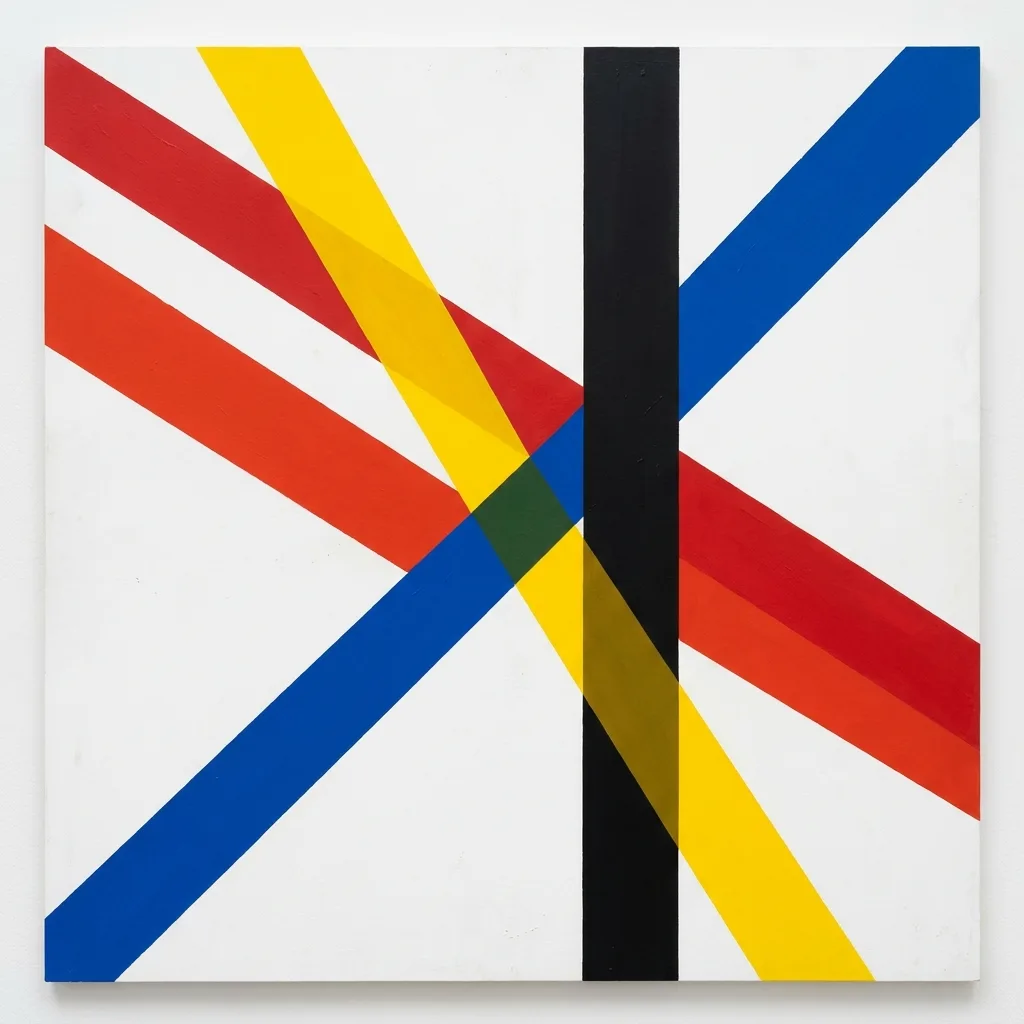
AI-generated in this artist’s visual idiom.
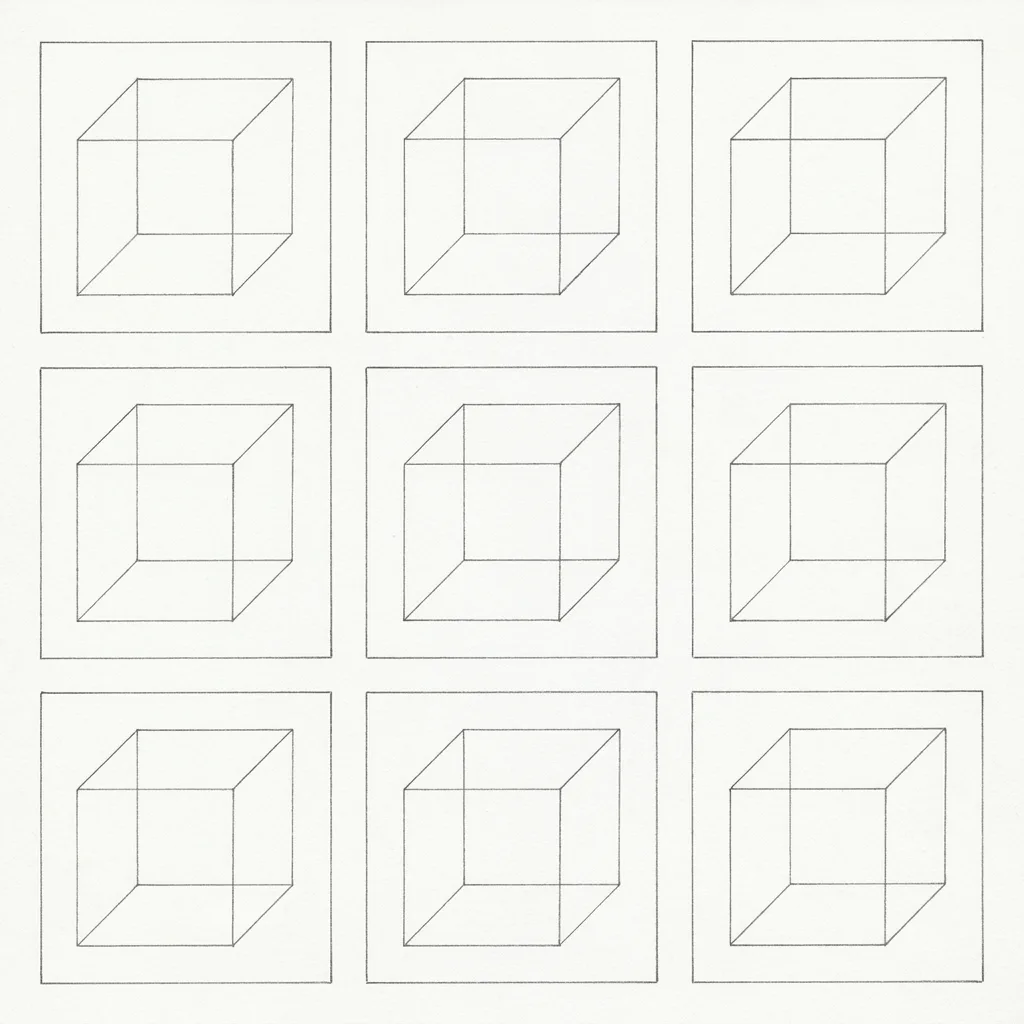
AI-generated in this artist’s visual idiom.
See the actual works
MASS MoCA holds a 25-year survey of LeWitt wall drawings. Major institutional holdings at MoMA, Tate, Centre Pompidou, and the Walker Art Center.
Citations & sources
b. 1929 · Contemporary / installation art
Yayoi Kusama
Japanese artist whose lifelong obsession with polka dots and infinite repetition has made her one of the most-visited living artists in the world.
Born in Matsumoto, Japan, Kusama experienced visual hallucinations from age ten — fields of dots, flowers that spoke to her — that became the lifelong source material of her work. Encouraged by a letter exchange with Georgia O'Keeffe, she moved to New York in 1958 and became central to the avant-garde with Infinity Nets, accumulation sculptures, and Infinity Mirror Rooms.
She returned to Japan in 1973 and in 1977 voluntarily admitted herself to the Seiwa Hospital for Mental Patients in Tokyo, where she has lived ever since, walking each day to her nearby studio to make work. Her career reignited globally from the 1990s onwards; her Infinity Mirror Rooms now draw queues at every major museum that hosts them.
Used on Airtistic.ai for: Practice-section hero — the energy and joyful repetition of rapid creative iteration.
AI-generated samples in this idiom
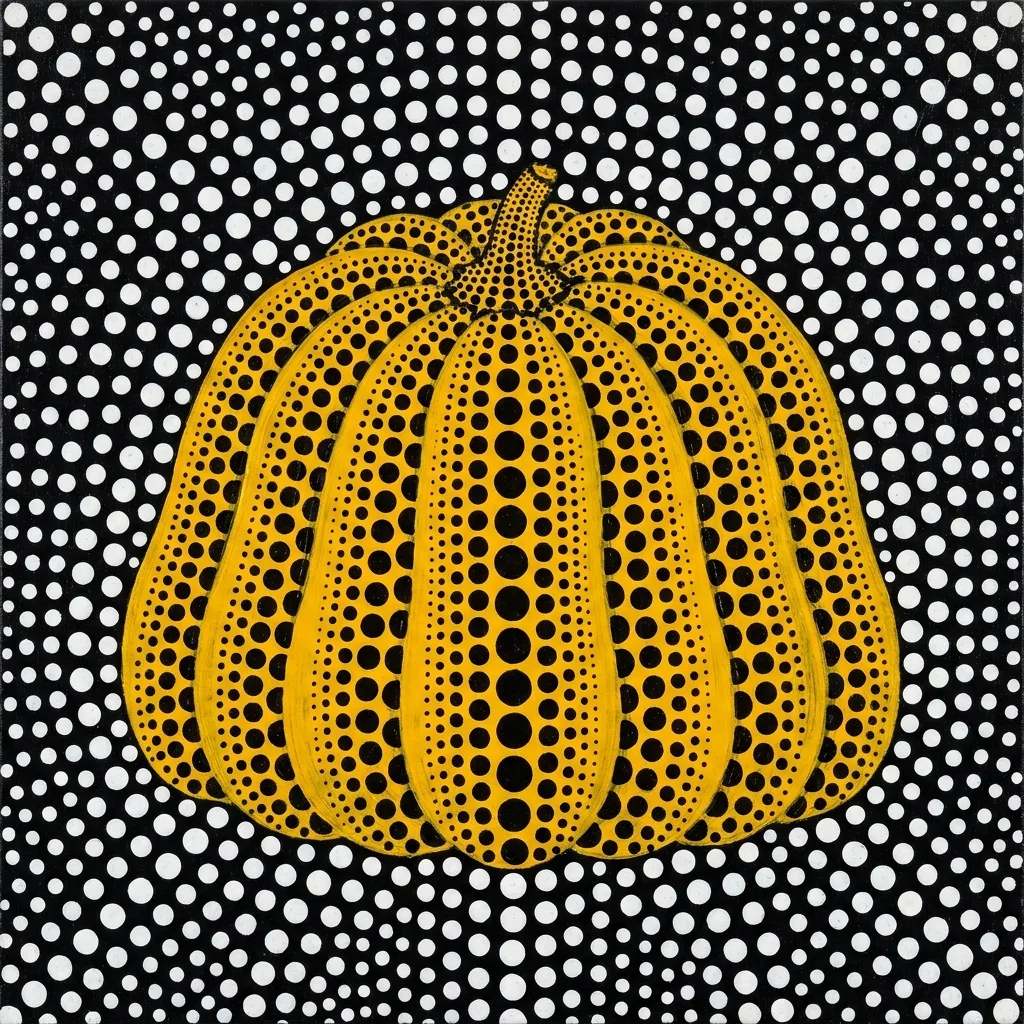
AI-generated in this artist’s visual idiom.
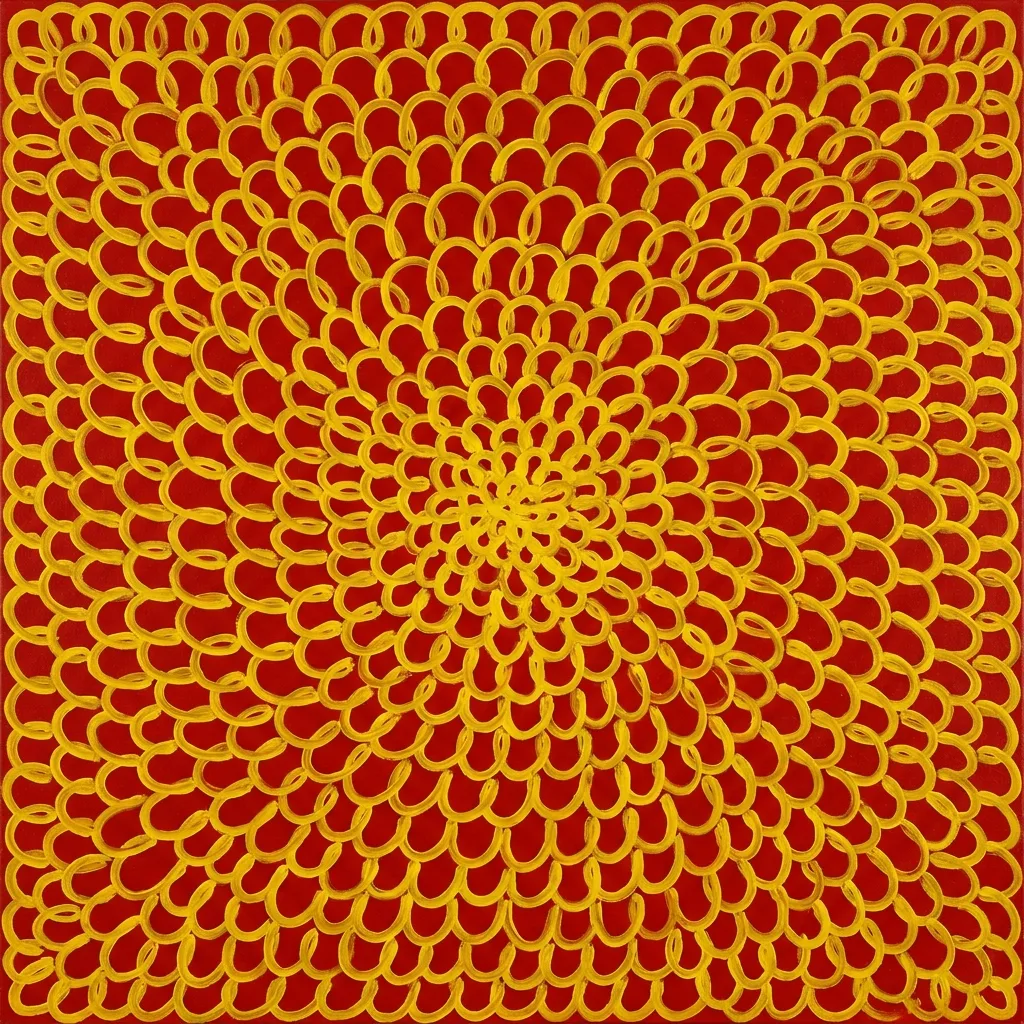
AI-generated in this artist’s visual idiom.
See the actual works
The Yayoi Kusama Museum opened in Tokyo in 2017. Major retrospectives have toured Tate Modern, the Hirshhorn, the Broad, and the Centre Pompidou.
Citations & sources
1832–1883 · Modern life / pre-Impressionism
Édouard Manet
Parisian painter who insisted on contemporary subjects and confident loose brushwork, opening the door for the Impressionists who claimed him as their unofficial leader.
Born into Paris's haute-bourgeoisie, Manet trained with Thomas Couture from 1850 and from the start refused the historical and mythological subjects the Salon expected. His "Déjeuner sur l'herbe" was rejected by the 1863 Salon and "Olympia" caused a riot at the 1865 Salon — both established him as both scandal and reference point.
The young Impressionists treated him as their unofficial leader though he refused to join their independent exhibitions, insisting on the official Salon as his battleground. His friendships with Baudelaire, Zola, Mallarmé, and Berthe Morisot shaped Parisian intellectual life. His last great work was "A Bar at the Folies-Bergère" (1882). He died in 1883.
Used on Airtistic.ai for: Galleries / Resources hero — the salon as social space, art and life observed at the same moment.
AI-generated samples in this idiom
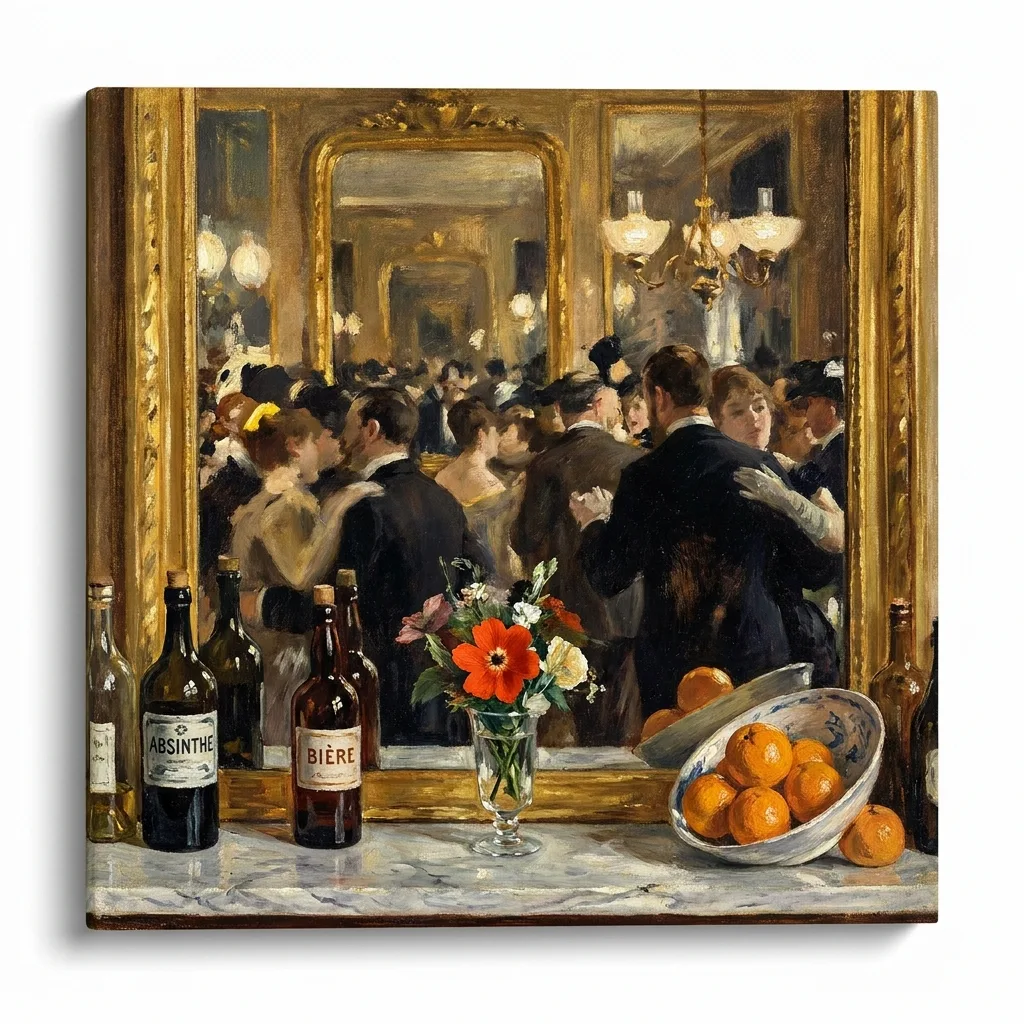
AI-generated in this artist’s visual idiom.
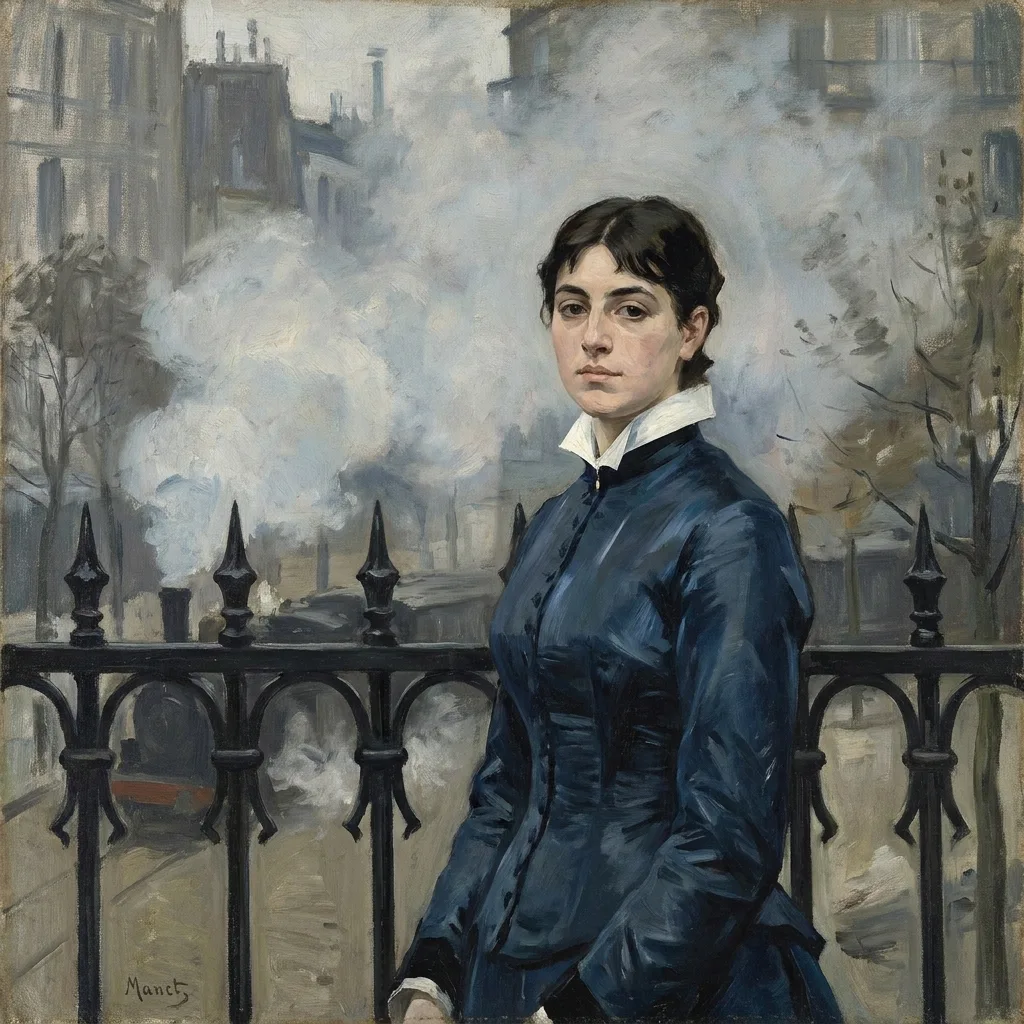
AI-generated in this artist’s visual idiom.
See the actual works
Major holdings at the Musée d'Orsay (Paris), the Met (New York), the National Gallery (London), and the Courtauld (London — "A Bar at the Folies-Bergère").
Citations & sources
1760–1849 · Edo-period ukiyo-e
Katsushika Hokusai
Edo-period printmaker whose "Thirty-six Views of Mt. Fuji" — including "The Great Wave" — is among the most reproduced images in human history.
Born in Edo (modern Tokyo) in 1760, Hokusai apprenticed at fourteen to a woodblock cutter and at eighteen joined the Katsukawa school. He changed his professional name some thirty times across his life — each marking a stage in his development. He worked in every ukiyo-e genre: actor prints, book illustrations, surimono for poets, manuals of brush technique, the multi-volume "Manga" sketchbooks.
From around 1820 onwards, working under the name Hokusai, he produced his greatest series: the "Thirty-six Views of Mt. Fuji", the "Hundred Views of Mt. Fuji", and "A Tour of the Waterfalls of the Provinces". He wrote, late in life, that everything he produced before age seventy was not worth speaking of. He died in 1849, aged 88, still drawing.
Used on Airtistic.ai for: Explore-section hero — the cresting wave of technological change.
AI-generated samples in this idiom

AI-generated in this artist’s visual idiom.
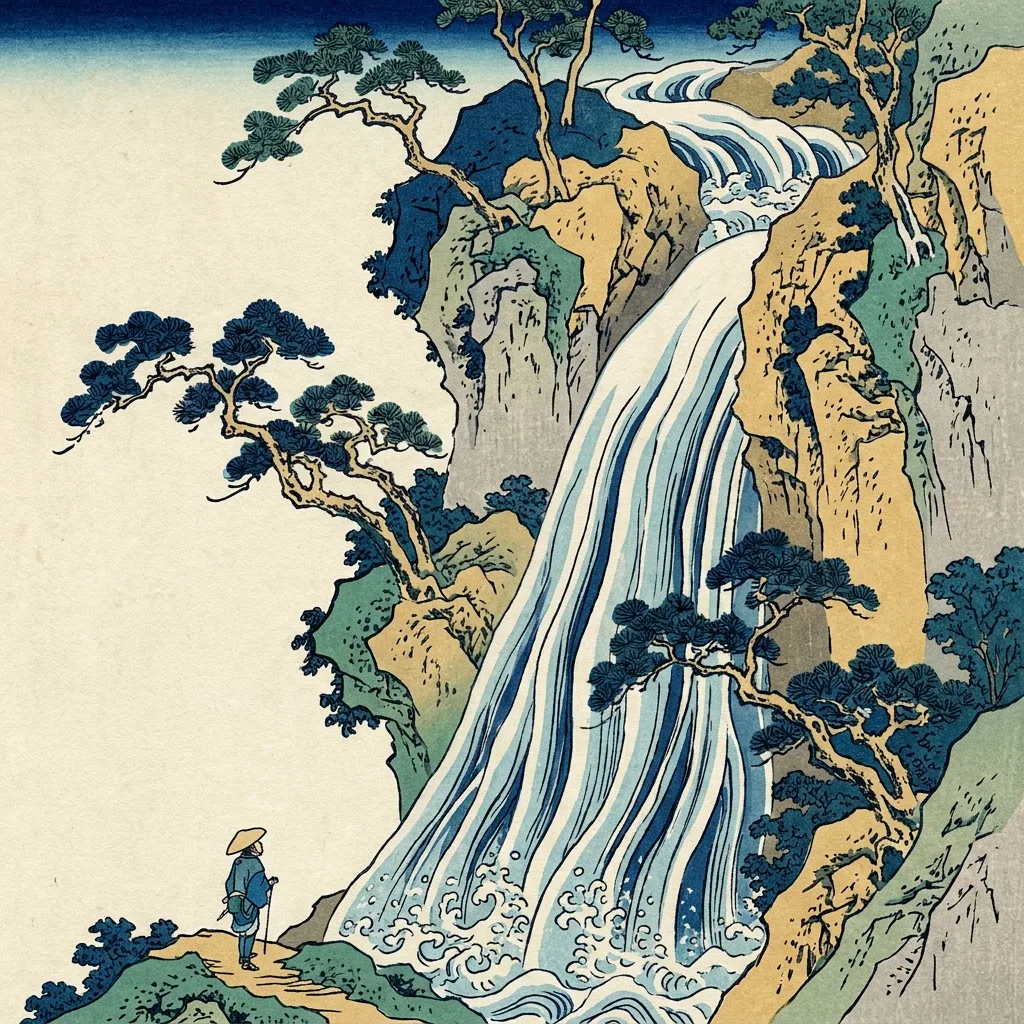
AI-generated in this artist’s visual idiom.
See the actual works
Major holdings at the Tokyo National Museum, the Hokusai Museum (Sumida-ku, Tokyo), the British Museum, and the Met (New York).
Citations & sources
1898–1991 · Modernist documentary photography
Berenice Abbott
American photographer whose "Changing New York" (1935-1939) is the canonical record of a city in transformation, and whose later science photography prefigured visual data work by decades.
Born in Springfield, Ohio, Abbott moved to New York in 1918 and to Paris in 1921, where she worked as Man Ray's darkroom assistant and discovered photography by accident. She opened her own portrait studio in Paris in 1926 and returned to New York in 1929. Over ten years she photographed New York's rapid transformation, completing "Changing New York" under the WPA Federal Art Project.
After 1939 she turned increasingly to scientific photography, developing apparatus to photograph waves, magnetism, and motion — work that prefigured later science visualization by decades. She also recognized Eugène Atget's importance, bought his archive after his death, and spent decades championing it until MoMA acquired it in 1968. She lived openly with women in a time that punished it.
Used on Airtistic.ai for: Services-section hero — architecture being built, the work of building capacity.
AI-generated samples in this idiom
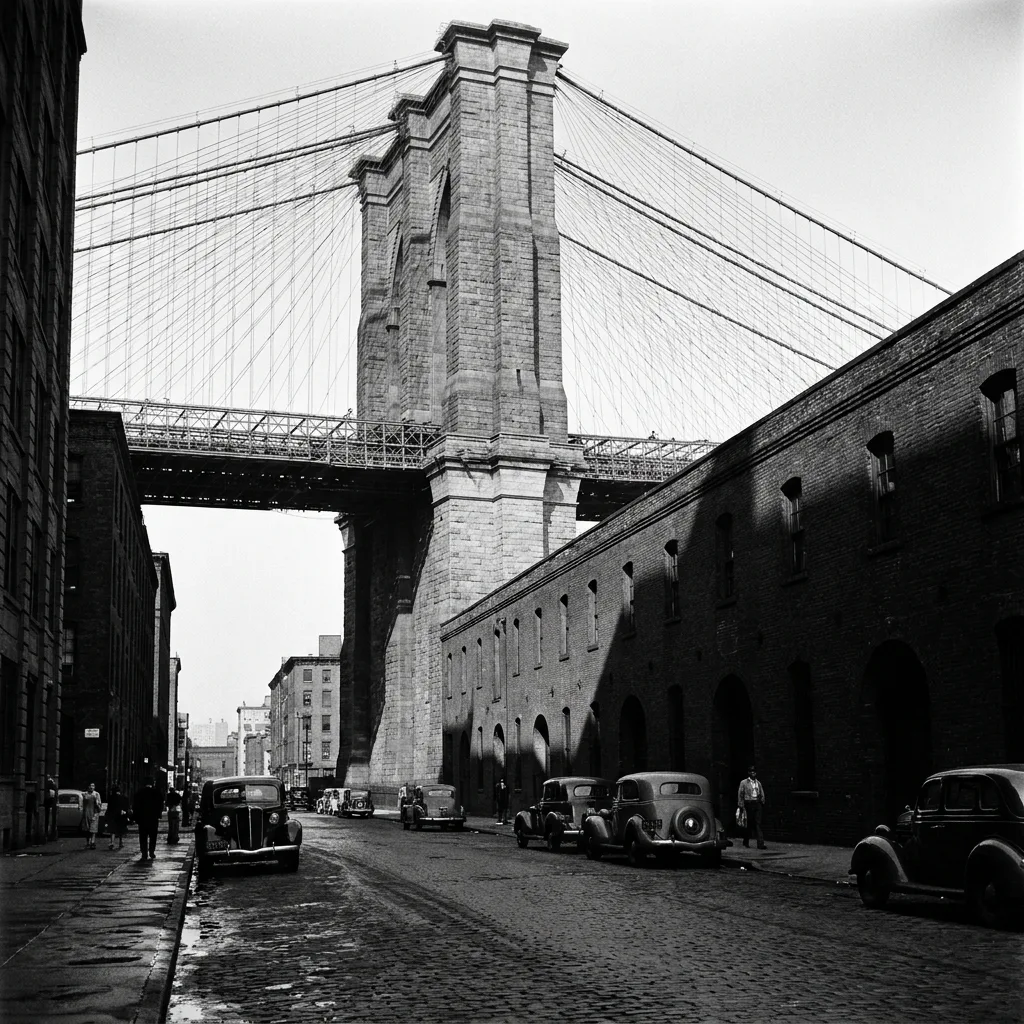
AI-generated in this artist’s visual idiom.
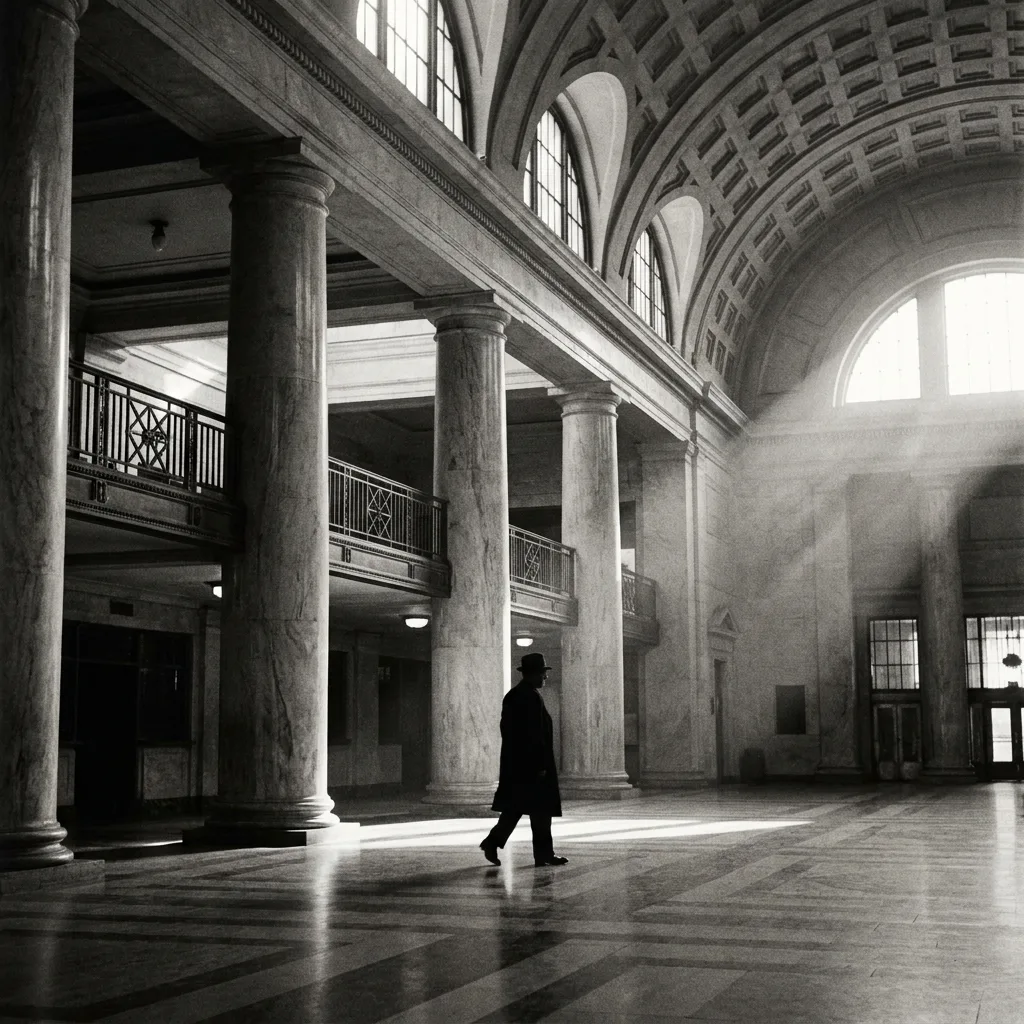
AI-generated in this artist’s visual idiom.
See the actual works
The Berenice Abbott archive is held primarily by the Museum of the City of New York and the New York Public Library. Major holdings at MoMA, the Met, and the Smithsonian.
Citations & sources
1867–1945 · German Expressionism
Käthe Kollwitz
German printmaker and sculptor who produced the most uncompromising visual record of working-class life and pacifist conviction in 20th-century European art.
Born in Königsberg, East Prussia, Kollwitz studied painting in Berlin and Munich (women were barred from the academies, so she trained in special women's schools). In 1891 she married Karl Kollwitz, a doctor whose practice in working-class Prenzlauer Berg gave her decades of close witness to the lives of laboring families.
Her son Peter died in October 1914 in Belgium during the first weeks of the First World War; she spent the next eighteen years working on the memorial sculpture "The Grieving Parents". The Nazis forced her out of the Prussian Academy of Arts in 1933. She was evacuated from Berlin during the bombing and died on 22 April 1945, sixteen days before the war ended.
Used on Airtistic.ai for: Opinion-section hero — the gravity and conscience of editorial writing.
AI-generated samples in this idiom
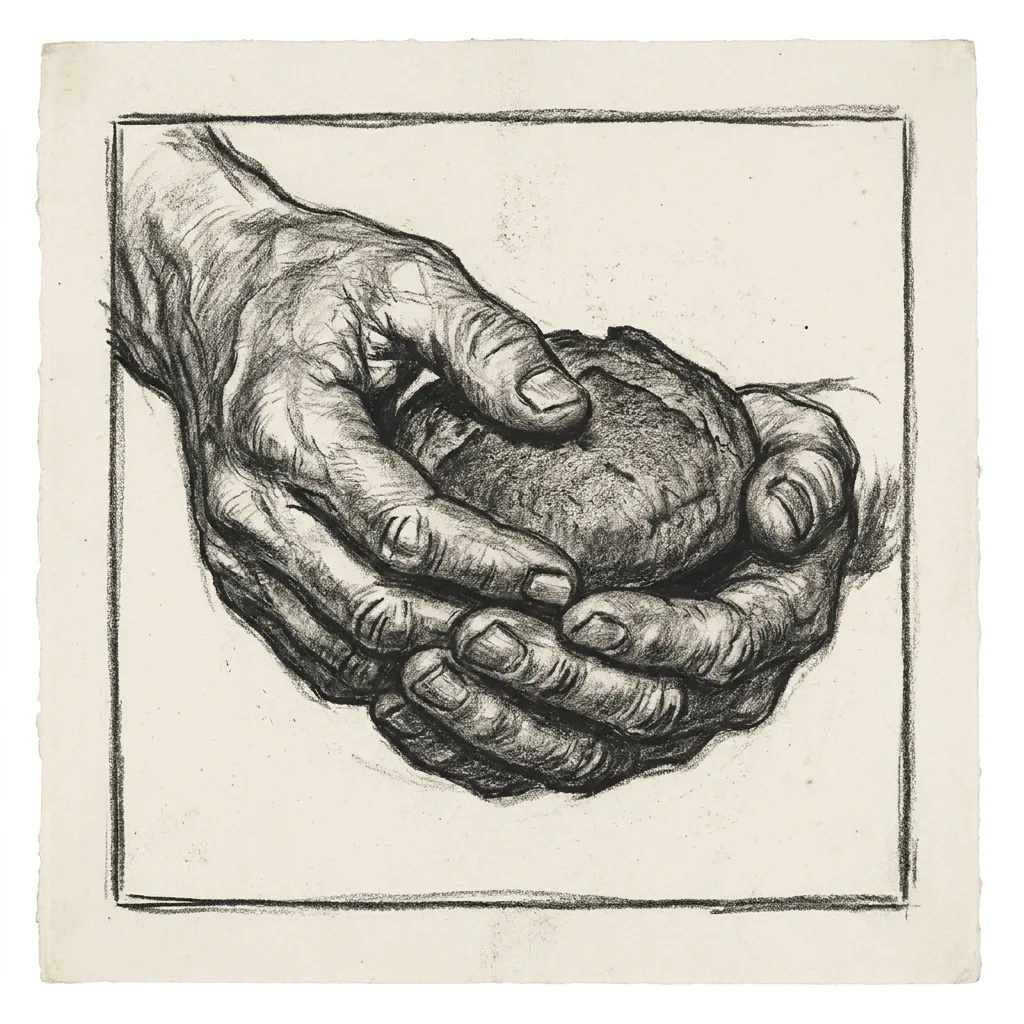
AI-generated in this artist’s visual idiom.
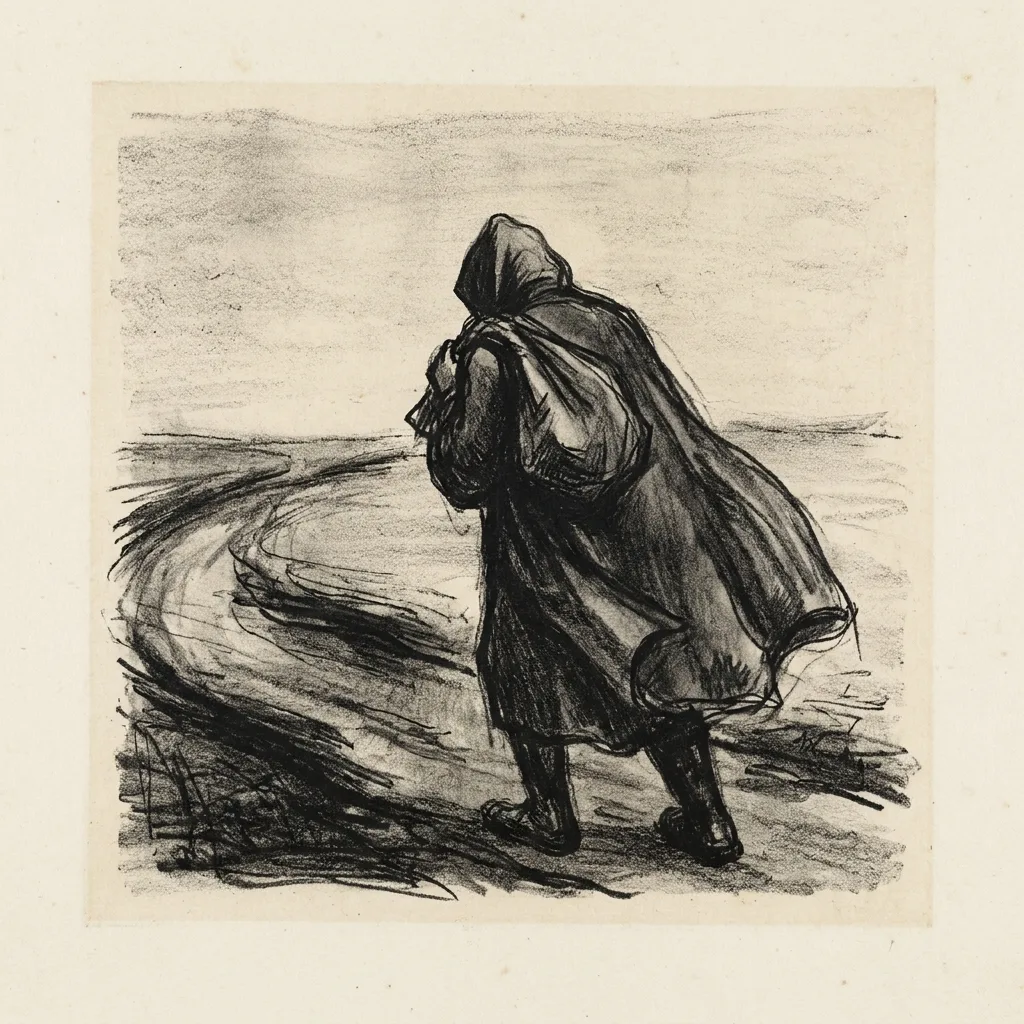
AI-generated in this artist’s visual idiom.
See the actual works
The Käthe Kollwitz Museum has locations in Berlin and Cologne. Major holdings at the British Museum, MoMA, and the Galerie Neue Meister (Dresden).
Citations & sources
1862–1918 · Vienna Secession
Gustav Klimt
Austrian painter and founding president of the Vienna Secession, whose golden, ornament-laden symbolism made the decorative the equal of high art.
Born in Baumgarten near Vienna in 1862 to a gold-engraver father, Klimt trained at the Vienna School of Arts and Crafts and made his early name on grand public decoration. In 1897 he broke with the conservative establishment to co-found the Vienna Secession, becoming its first president under the motto «To every age its art, to art its freedom».
His ceiling paintings for the University of Vienna (1900–1907) were attacked as obscene; he returned the fee, withdrew them, and never took another state commission. After seeing the Byzantine mosaics of Ravenna, his «golden phase» produced «The Kiss» and the «Portrait of Adele Bloch-Bauer I». He spent summers painting square landscapes at the Attersee and encouraged the young Egon Schiele. He died in Vienna in 1918 after a stroke.
Used on Airtistic.ai for: Inspiration artist and chat persona — the golden, ornamental idiom of the Vienna Secession.
AI-generated samples in this idiom
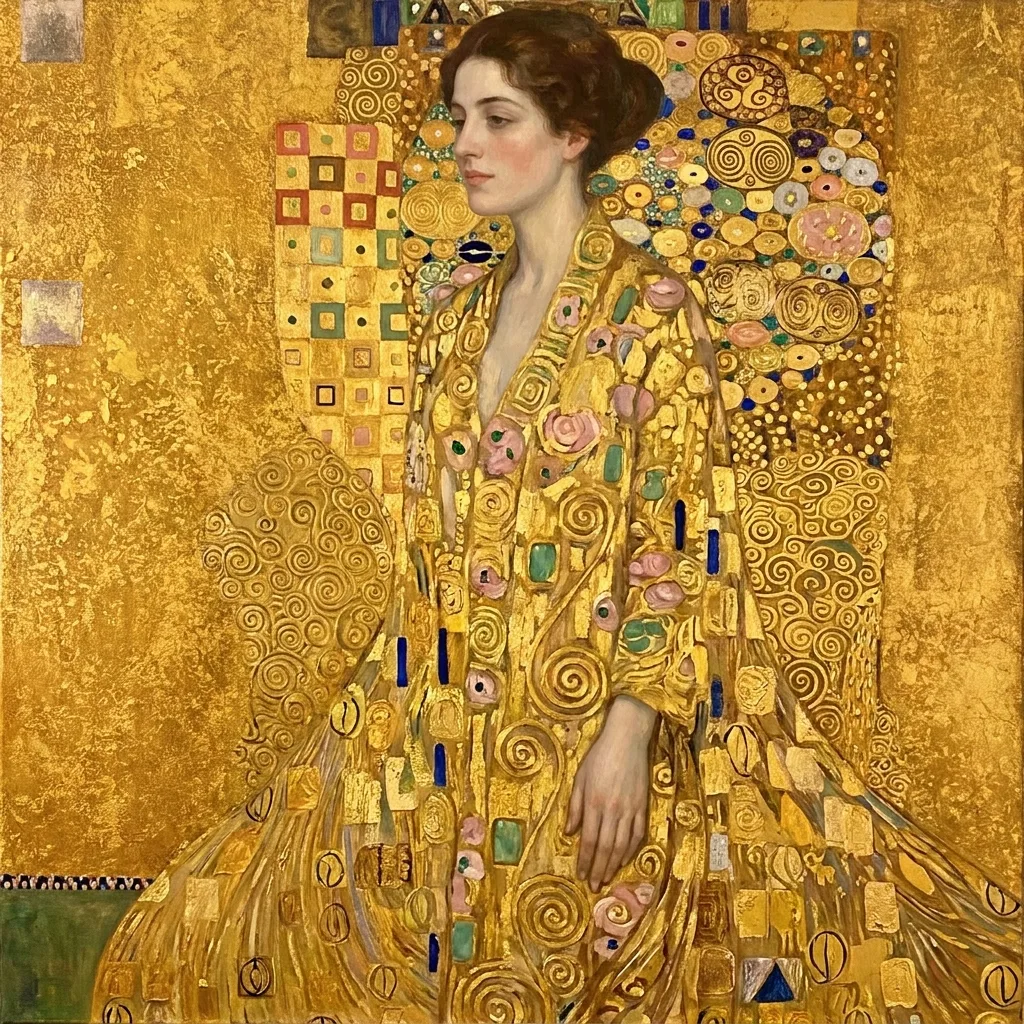
AI-generated in this artist’s visual idiom.
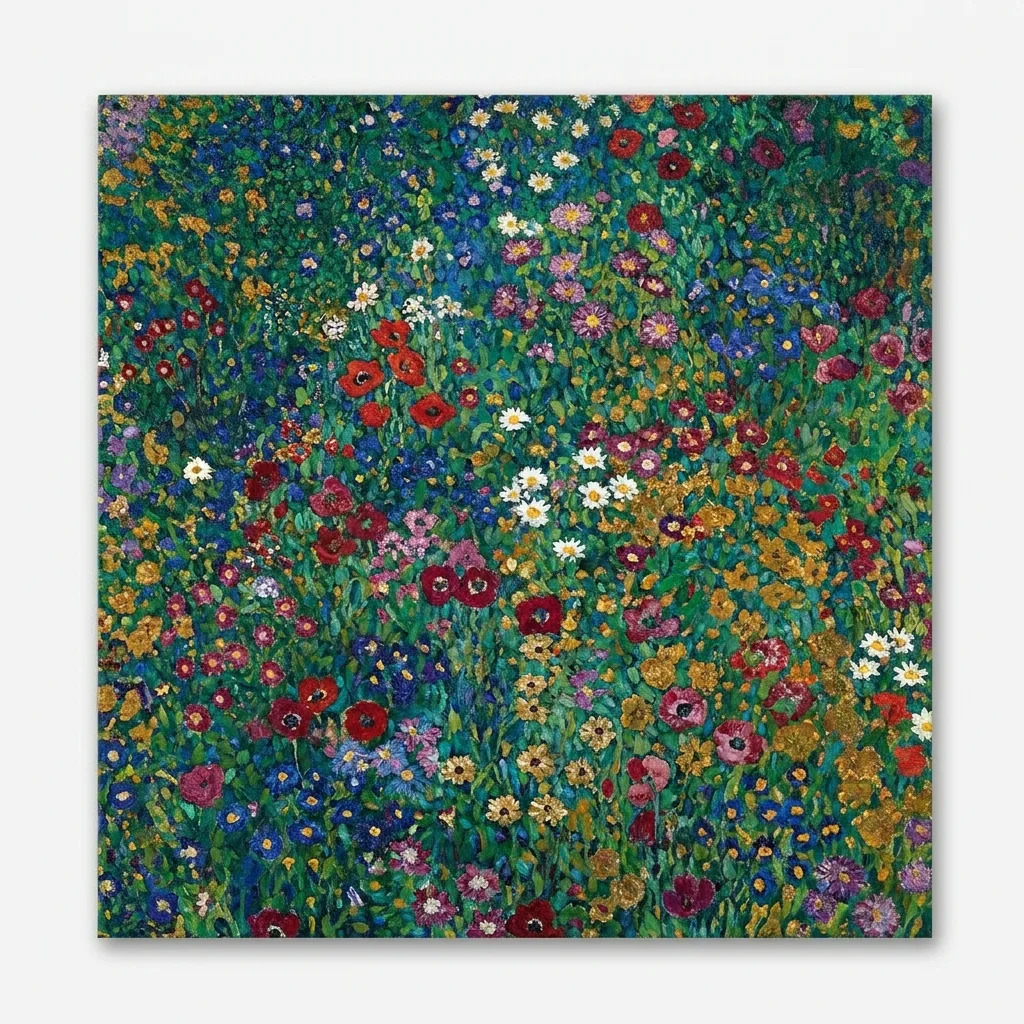
AI-generated in this artist’s visual idiom.
See the actual works
«The Kiss» and major holdings are at the Belvedere in Vienna; the «Portrait of Adele Bloch-Bauer I» is at the Neue Galerie, New York. Further works at the Leopold Museum and the Klimt Villa, Vienna.
Citations & sources
Two true stories from building this page
These inspirations were not assembled cleanly. Two moments in the process are worth telling, because together they show both the risk of working with AI and the value of keeping a human — and a clear set of rules — in the loop.
Two Klimts, and a happy accident
When Airtistic.ai’s founder, Carlos Miranda Levy, was choosing the mood and the artistic inspirations to build into the site’s aesthetic, he named several painters he loved — among them Klimt, one of his mother’s favorite artists. He was picturing Gustav Klimt: the shimmering gold of “The Kiss”, the spiraling figures of “The Three Ages of Woman”.
The AI, of course, did not know his mother. It heard “Klimt” and surfaced Hilma af Klint — the Swedish pioneer of spiritual abstraction, whose seance-guided canvases predate Kandinsky. A different artist entirely, from a different current of ideas. Rather than simply correct the drift, we looked at what the machine had offered and found it genuinely compelling: af Klint’s early abstraction belonged on a site about art and AI. So we kept her — and explicitly added Gustav Klimt as well. That is why two “Klimts” now sit among these inspirations.
We share this as a small, honest illustration of both sides of working with AI: the risk that an unattended system quietly substitutes its own associations for yours, and the serendipity that the very same drift can bring — when you notice it, treat it as an out-of-the-box exploration rather than an error, and consciously choose what to keep.
When the AI flagged its own near-plagiarism
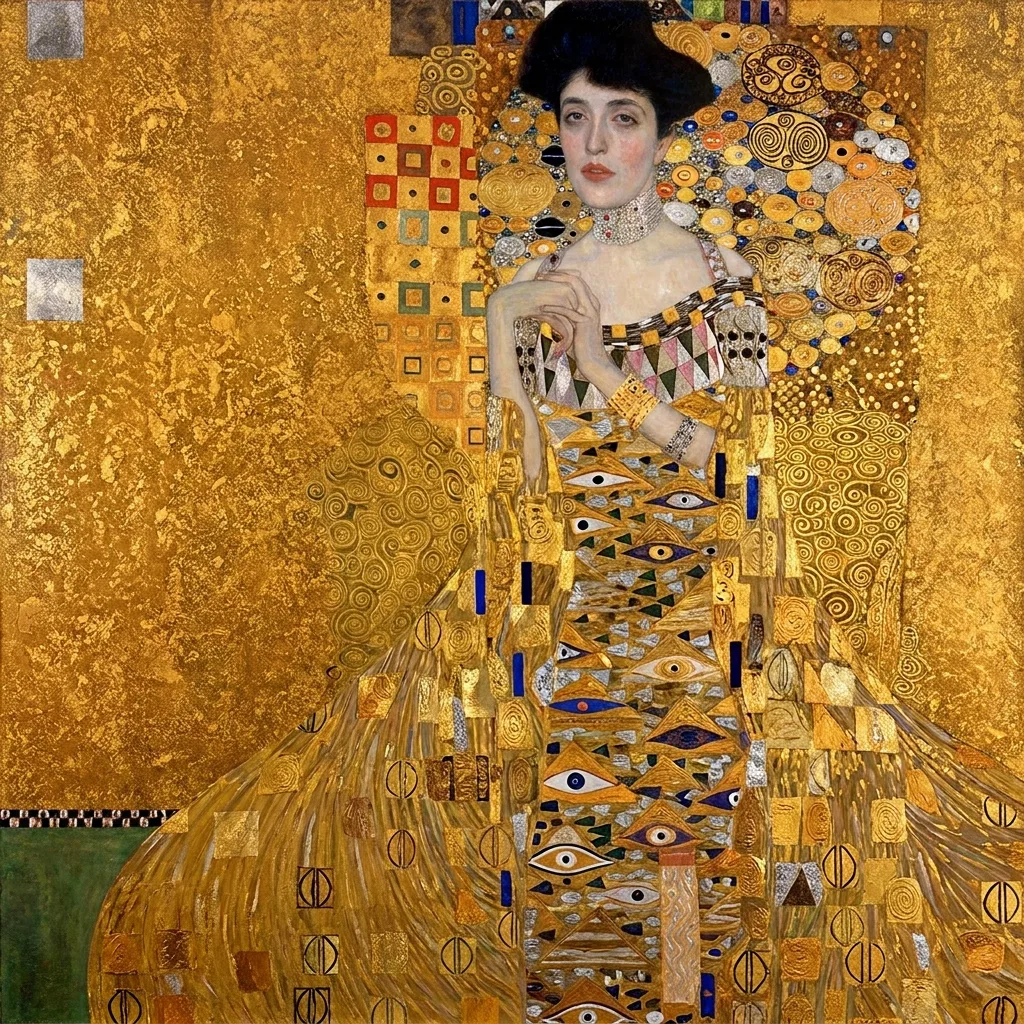
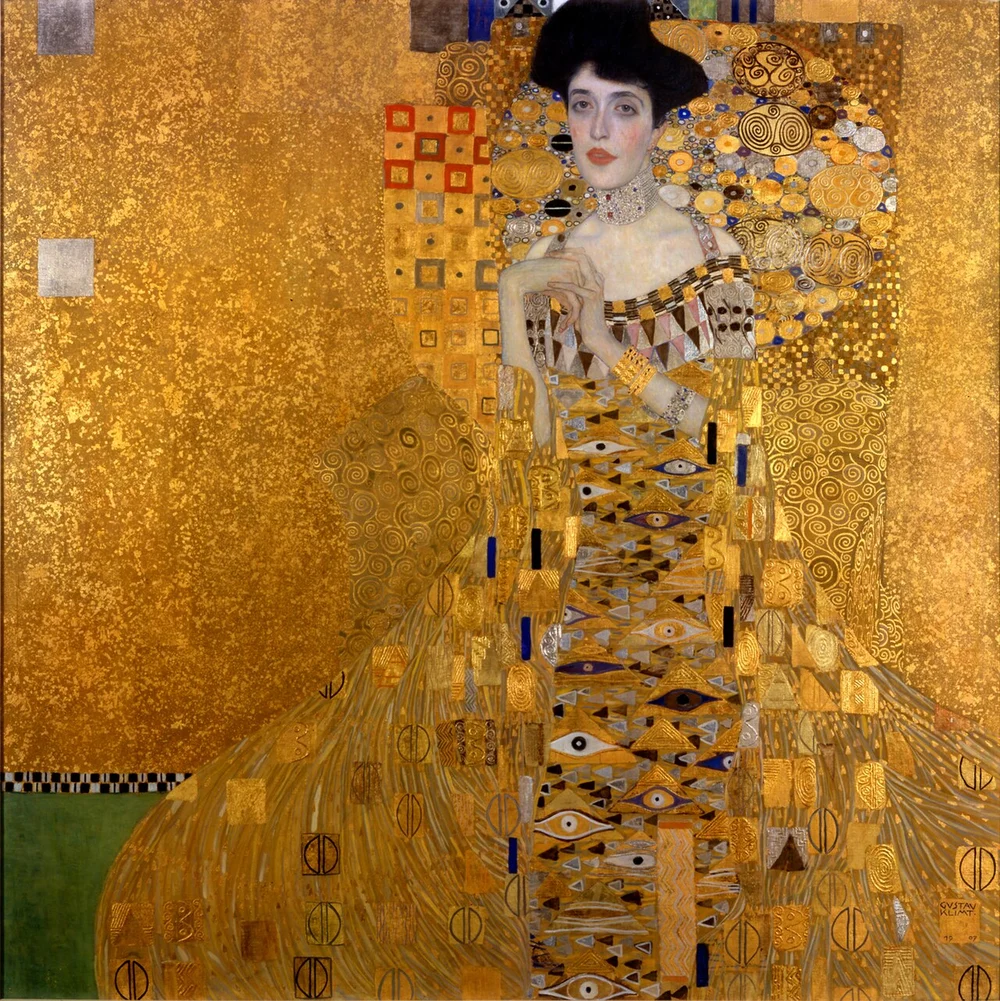
The second story happened while making this very page. We asked the AI to generate two sample artworks in Gustav Klimt’s golden idiom. It produced two images — but before we published, the AI itself stopped and flagged one of them: it had come out so close to a specific real painting, Klimt’s “Portrait of Adele Bloch-Bauer I” (1907), that presenting it as an interpretive original would be a misrepresentation. It recommended regenerating. We agreed. Here is the discarded version beside the actual painting:
What the AI reported, verbatim
“Beautiful, but a problem. The model rendered it as a near-reproduction of a specific real painting — Klimt’s Portrait of Adele Bloch-Bauer I (1907): the same frontal pose, dark updo, gold choker, clasped hands, and the signature eye-and-triangle ornament. A knowledgeable viewer would name the actual painting. That conflicts with the page’s own stated principle — these are not reproductions of specific real works; they are interpretive originals. Calling a near-copy of Adele an interpretive original would be a small misrepresentation, the kind of editorial-accuracy issue this project takes seriously. (There is no legal problem — Klimt died in 1918, the work is public domain, and we credit him — it is purely the honesty-of-framing principle.) My recommendation: regenerate, steered away from the Adele composition toward a clearly original subject in the golden idiom.”
The image now shown as our Klimt sample is the regenerated one — a standing figure in the golden idiom that does not reproduce any single painting.
This is the other half of the lesson. An unguarded, unattended AI will happily hand you a near-copy and call it original. A system given clear principles — and checked by a human who holds to them — catches the problem before it ships. The guardrails are not bureaucracy; they are what let you use the tool honestly.
Each artist is also a chat persona
Click "Chat with…" beside any artist to open a conversation with an AI roleplay grounded in their documented biography, voice, and views. They can talk about art, life, their period, and yours. They are clear that they are AI personas; they will not pretend to be the real person.
Back to About
Comments
Sign in to comment